The practice of medicine has changed from its beginnings to the present day. Technological advances and changes in health service management have led to a distance between the patient and the physician. On the other hand, professionals prefer not to have a patient of their own, but to comply strictly with a part of the diagnosis or treatment (specialists), without getting involved or committing themselves.
Abstract Humanization is an ethical imperative that contributes to safeguarding human dignity in harmony with bioethical principles and deontological regulations that govern practices in a health context. The aim of this study is to learn about the advances in the approach to humanization in health care in Ibero-America in the last ten years, through a systematic review.
Patient empowerment is one of the main pillars of humanization. Therefore, consideration of patients' preferences and expectations should be taken into account during the practice of any healthcare professional. Improving overall survival and quality of life are the main wishes of patients.
"...the great challenge of the health system in the 21st century will be to make the patient once again the protagonist of the actions of all professionals." Bro. Pierluigi Marchesi O.H.
The humanization of health is relevant in Colombia, but care and assistance are characterized by a dehumanized action that demands to be recognized as a problem. Therefore, the Colombian health system determined general indications for the organization of the humanization of health as an accreditation issue to be structured and implemented in all hospital institutions as a thematic axis of quality and humanization in health care.
The analysis of the concept of Humanization of health care presents a theoretical and reflexive approach, which evidences the principles and values that give added value to the health services provided in a changing context.
The humanization of care, or humanized care, could be defined as the interaction between the knowledge of science and the values of the human being in order to establish quality care centered on the individual. It is common to hear about the humanization of care in many areas of nursing and health, but it is not common to incorporate this practice into Occupational Health.
Evaluation of humanized care in public health care institutions in five (5) municipalities of the department of Córdoba (Montería, Sahagún, Lorica, Planeta Rica and Montelíbano) in 2016.
The article explores the contributions of cognitive neuroscience to the education of young people and adults. The advances in the understanding of the brain open new contributions in the educational field, the desire to explore these contributions supports this text based on the analysis of a participatory research process developed with teachers of youth and adult education.
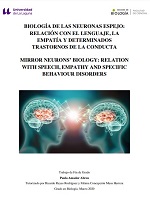
This review paper describes a series of experiments carried out after the controversial discovery of a group of specific motor neurons, called mirror neurons due to their ability to reflect the actions and mental states of other individuals, and identify them as their own, both during the observation of another's motor act, and when hearing a sound related to it.
The neural circuits activated in a person who performs actions, expresses emotions and has sensations, are also activated, automatically through a system of mirror neurons, in the observer of such actions, emotions and sensations. It is proposed that this finding of shared activation suggests a functional mechanism of "embodied simulation" consisting of the automatic, unconscious and non-inferential simulation in the observer of the actions, emotions and sensations performed and experienced by the observed.
Based on scientific evidence and analyses due to studies by researchers such as Rizzolatti, Sinigaglia, Galle-se, Goldman, Iacoboni, etc., this article argues that the link between mirror neurons and emotional empathy is corroborated by neuroscience studies on perceptual activity and emotional reactions.
This paper attempts to approach the neurophysiological theory of mirror neurons, developed by the Italian scientist Giacomo Rizzolatti, based on research on the motor function of neurons in the frontal and parietal cortex of primates. First, basic theoretical foundations developed by some scientists who have addressed the theory of mirror neurons in relation to the different psychological phenomena of the learning process are presented.
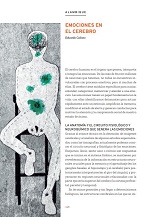
The human brain is the organ that generates, interprets and integrates emotions. Of the more than 80,000 million neurons we have, not all of them are involved in emotional processes, but many of them are. The brain has specific modules to initiate, understand, categorize, memorize and attend to an emotion. Emotions play a fundamental role in life: with them we identify triggers to act quickly in response to a stimulus, they amplify memory, modify alertness and generate behaviors to motivate attention and social understanding of our mood.
Mirror neurons, known only in humans and monkeys, are activated when the individual performs an action and when he/she observes a similar action performed by another individual, this belongs to the field of perception-performance-intention and is part of the theory of mind.
We use cookies to give you the best experience.
Privacy policy