
What is VHL?
The Virtual Health Library (VHL) is an information management model based on collaborative and networked work, applied to the creation, organization and dissemination of scientific and technical information and evidence in the health area, made available online for user access through the VHL portals.
History of the VHL
The VHL proposal was presented during the IV Pan American Congress on Health Sciences Information. IV Pan American Congress on Health Sciences Information held in San José, Costa Rica in March 1998, and unanimously approved by the participants through the signing of the Declaration of San Joséwhich recognizes the project as a cooperative and integrating strategy of the region aimed at facilitating the widest access to information for the permanent improvement of the health of our peoples. At the same time, the VHL would be a tool for strengthening health systems and for sustainable human development in the region.
More information: https://bvsalud.org/vitrinas/es/post_vitrines/bvs-25-aniversario/
About the VHL
The Virtual Health Library (VHL) is a public good that facilitates access to and use of scientific and technical health information with the aim of contributing to reducing the gap between health knowledge and practice in the countries of Latin America and the Caribbean (LAC).
In this way, the VHL facilitates and promotes access to scientific and technical health information:
- As a health information management network
- As a network for the exchange of knowledge and scientific evidence on health information.
- It is aligned with PAHO's mission of democratization of information to achieve the goal of "Health for All" and is a strategic element for the promotion of equity in health and the improvement of living conditions of the peoples of the Americas.
- It is a multidisciplinary work
Promotes:
- The exchange and use of scientific health information sources
- Open and universal access on the web
- Technical cooperation in scientific health information
- Equity in access to health information
- Promotion of alliances and consortia to maximize the shared use of resources
- Promotion of decentralized cooperative work, development and operation at all levels
- Integrated evaluation and quality control mechanisms
It is made up of:
More than two thousand institutions in thirty countries, the participation is institutional to guarantee the permanence and execution of the tasks.
- Public and private institutions
- Non-governmental organizations and governmental agencies
- Research institutions
- Educational Institutions
- Health Services
- Natural persons, professionals, researchers, students and in general citizens exercising their right to information and health (consultation).
The three pillars of the VHL
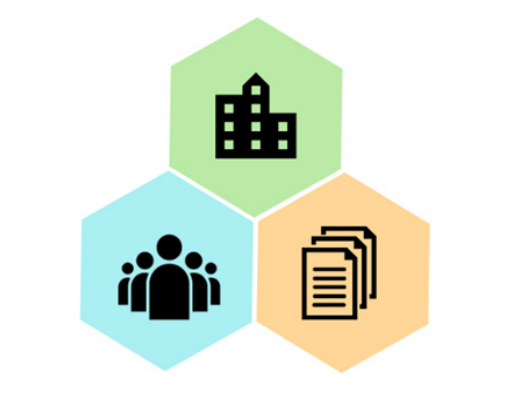
The VHL is made up of three pillars: institutions, contents (information sources) and users.
Institutions
Contents
Users
Based on the collaborative network model and with decentralized operation, the VHL was developed by institutions working in the area of health information, whether public, private, non-governmental organizations, government agencies for management, research, teaching and/or health services. This network of institutions, also called the VHL Network, is one of the pillars of the VHL.
The contents generated, selected and systematized by the network of institutions and information professionals constitute the second pillar of the VHL, being its driving force.
In the VHL, these contents, organized and made available to meet the information needs of users, are called Information Sources. The information sources are represented by means of databases, directories and catalogs.
As they are the reason for the existence of any library or information service, users form the third pillar of the VHL, and are essential for it to fulfill its mission. VHL users are: managers, researchers, students, clinical, teaching, and health care professionals.