This article discusses scientific advances in medicine and how they have impacted the quality of life and life expectancy of people. However, it also addresses the paradoxes and challenges that accompany these advances, such as the dehumanization of health care due to the overuse of technology and the lack of communication between patients and professionals.
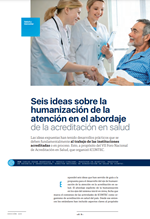
The humanization of health is relevant in Colombia, but care and assistance are characterized by a dehumanized action that demands to be recognized as a problem. Therefore, the Colombian health system determined general indications for the organization of the humanization of health as an accreditation issue to be structured and implemented in all hospital institutions as a thematic axis of quality and humanization in health care.
Health accreditation in Colombia has proposed an approach to the subject; the aim is to propose practical and visible solutions to recognized problems and to encourage institutions to address the problem.
This article presents six ideas that have served as a guide to the proposal for the development of the humanization of care axis in health accreditation.
This article discusses the effects of the physical environment on the health and satisfaction of users of hospital environments, as well as the perception of the environment and its calming and therapeutic effects on patients.
The aim of this article is to determine the spiritual well-being of nursing personnel and their ethical contribution to the humanization of health. The method followed corresponds to the quantitative, descriptive, cross-sectional approach.
Health care services require real actions to achieve their effective humanization, so that this does not remain in discourse and on paper, but has a clear impact on patients.
Illness and hospitalization represent an interruption in the individual's daily life, causing loss of health and distress, which complicates the process of adaptation.
In the field of the humanization of health and social intervention, our proposal would define professional competence as the professional's ability to perform with skill, expertise and comfort, achieving optimal results in any aspect of the human being, with a view to achieving the goals of the profession itself.
A successful experience in humanization and quality should be a sustainable initiative that seeks to solve a felt need in human health or quality of life in a community.
We use cookies to give you the best experience.
Privacy policy